
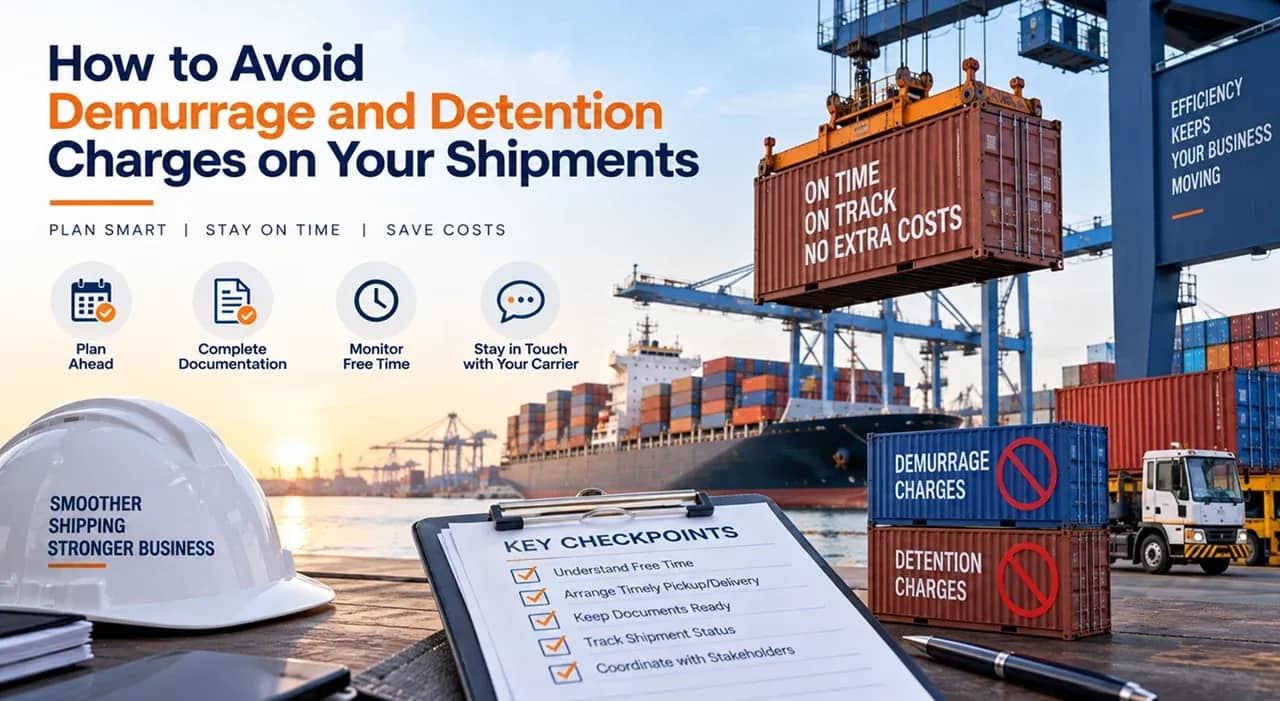

Demurrage and detention are the two charges importers are most often surprised by — and they are almost always avoidable. They are not penalties for doing anything wrong; they are the clock running out on free time that started the moment your container was discharged. Knowing how that clock works is most of the battle.
What Is Demurrage?
Demurrage is charged when your full container stays inside the port or terminal beyond the agreed free days. It is the terminal charging you for occupying its yard space. The clock usually starts when the container is discharged from the vessel and stops when it leaves the gate.
What Is Detention?
Detention is charged when you keep the carrier's container outside the port beyond the free days — typically while it waits to be unloaded at your warehouse. Here you are paying for the equipment itself, not the yard. The clock runs until the empty container is returned to the nominated depot.
Demurrage vs Detention
| Factor | Demurrage | Detention |
|---|---|---|
| Where the container is | Inside the port or terminal | Outside, with you |
| What you are paying for | Yard space | Use of the container |
| Clock starts | Discharge from the vessel | Container leaves the port |
| Clock stops | Container exits the gate | Empty returned to the depot |
| Charged by | Terminal or carrier | Carrier |
| Usual cause | Clearance not completed in time | Slow unloading or empty return |
Why These Charges Build Up
- Documents arrive late, so clearance cannot even begin
- A discrepancy triggers an examination and the shipment is held
- Duty payment is delayed and release waits on it
- No transport was arranged in advance for the day of release
- The warehouse has no free slot to unload on arrival
- The empty container sits on site after unloading
How to Avoid Them
- Send documents early. Get the invoice, packing list and Bill of Lading to your clearing agent well before arrival so the Bill of Entry can be filed in advance.
- Know your free days. Confirm the exact free time for demurrage and detention at the time of booking — they differ by carrier, port and container type, and they are often negotiable.
- Pre-arrange transport. Book the vehicle against the expected release date, not after release.
- Plan the unloading slot. Make sure labour and space are ready the day the container reaches you.
- Return empties promptly. Detention keeps accruing until the empty is back at the depot.
- Track the vessel. Arrival dates move; check the schedule rather than the original ETA.
- Negotiate upfront. On regular volumes, extra free days are often cheaper than paying for them later.
What to Do If Charges Have Already Started
Act on the same day rather than waiting for the invoice. Find out exactly what is holding the container, settle any duty or query immediately, and get transport moving. If the delay was caused by the carrier or the terminal — a late arrival notice, a gate closure, a system outage — raise a waiver request straight away with dates and evidence. Waivers are far more likely while the shipment is still live.
How AR Global Logistics Helps
We work backwards from the vessel's arrival: documents checked and filed in advance, duty ready, transport booked against the release date and empties returned on time. We track free days on every container and tell you before the clock runs out, not after the invoice arrives.
Conclusion / Summary
Demurrage is the port's clock, detention is the carrier's, and both start whether or not you are ready. Get the paperwork in early, confirm your free days at booking, line up transport and unloading before arrival, and return empties quickly. Handled that way, these charges stop being a routine cost of importing.
Want to keep your shipments clear of extra charges?
Services Covered in This Post
International Freight Forwarding – Air & Sea
AR Global Logistics provides reliable international freight forwarding solutions by air and sea for importers and exporters.
Explore International Freight Forwarding – Air & SeaImport & Export Customs Clearance
Customs clearance is an important part of every international shipment.
Explore Import & Export Customs ClearanceDoor-to-Door Logistics
Managing different logistics partners for pickup, freight, customs and delivery can make shipping complicated.
Explore Door-to-Door Logistics